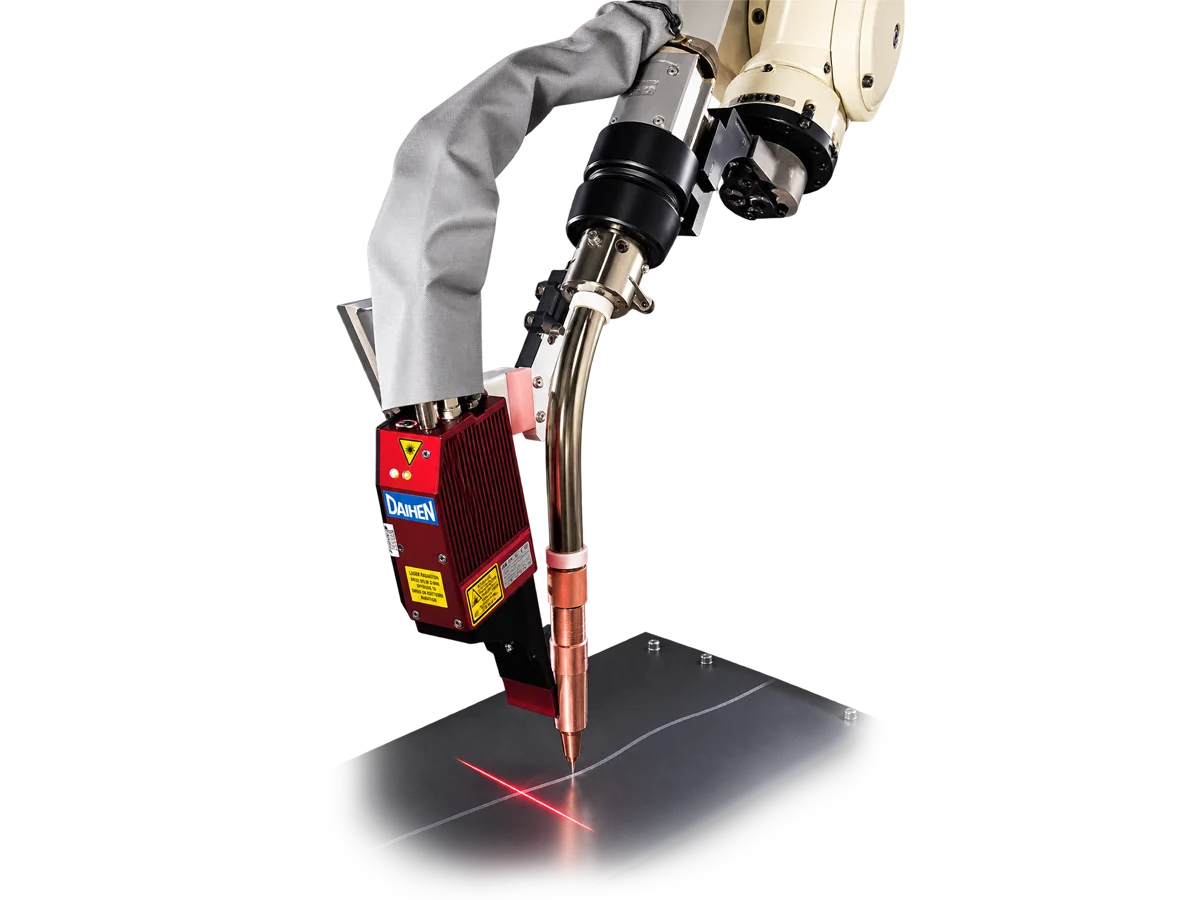
FD-QTS
A compact, high-speed laser tracker that helps the torch follow the joint during welding.
- Measures joint position and gap as welding progresses
- Can adjust torch position, angle and welding settings to suit the joint
Even well-positioned parts can vary slightly. OTC DAIHEN sensing technologies help robots find the joint before welding and follow its path as welding progresses.
Talk to Us About Sensing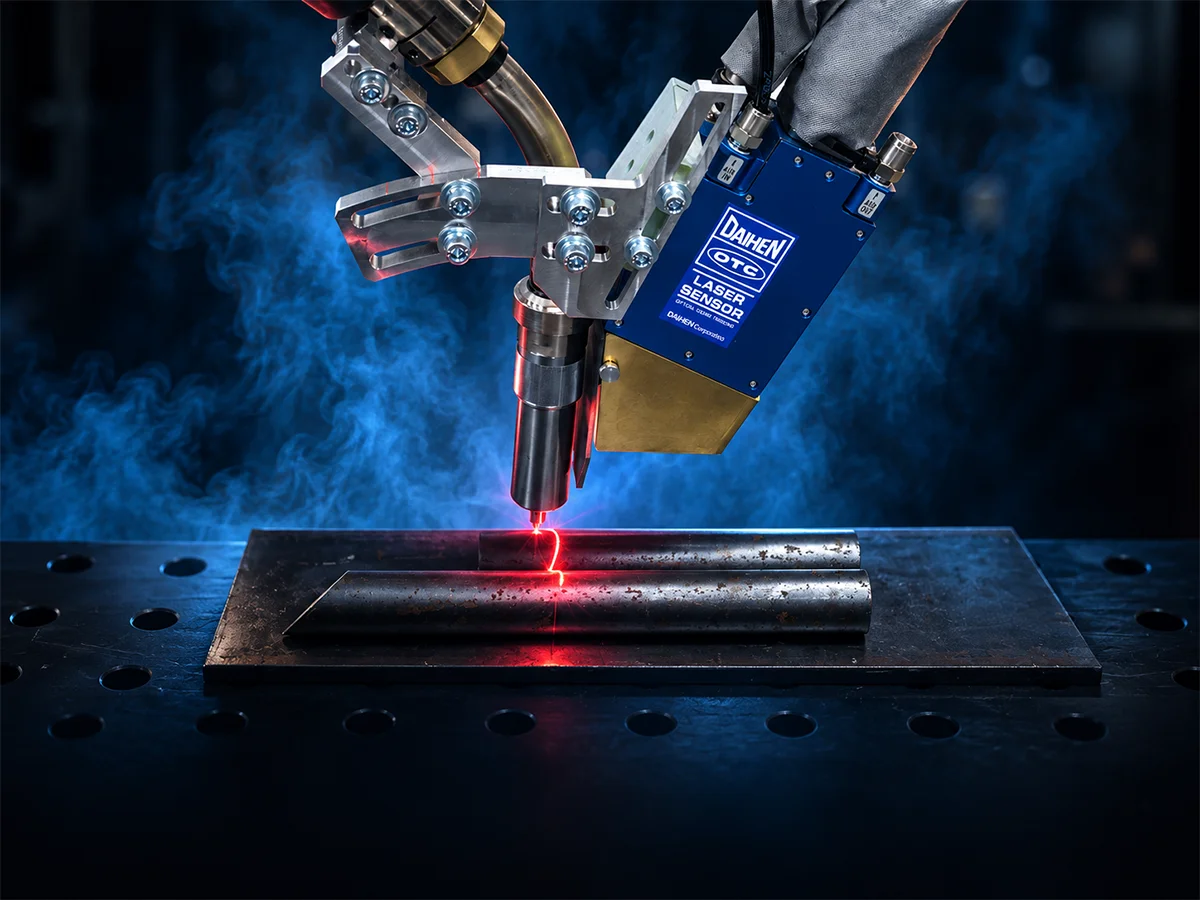
Laser sensors measure the joint ahead of the torch, helping the robot follow the actual weld path rather than relying only on a programmed position.
A compact, high-speed laser tracker that helps the torch follow the joint during welding.
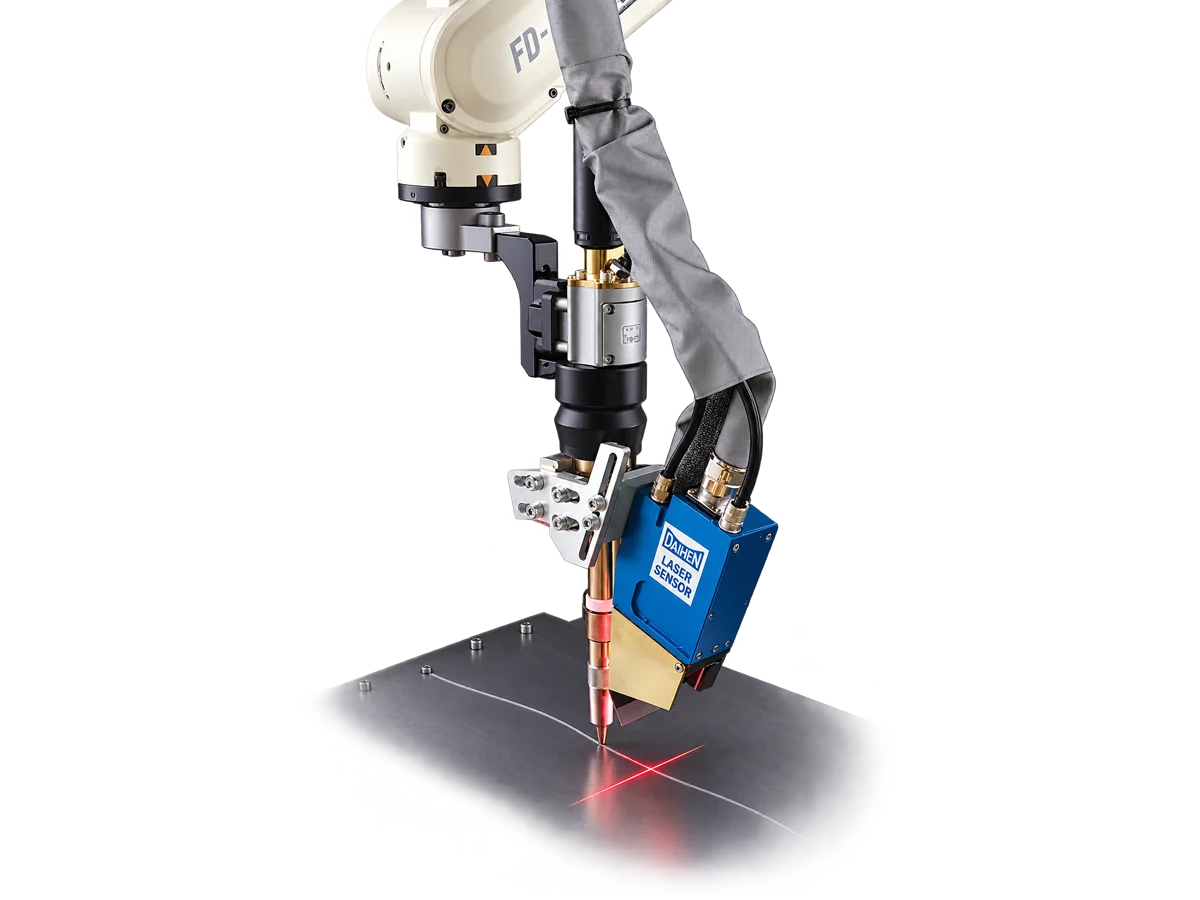
Laser tracking for compatible FD-19 systems, helping the robot follow the joint as it welds.
Find the actual joint position before welding starts, so the robot can allow for differences in how each part is positioned.
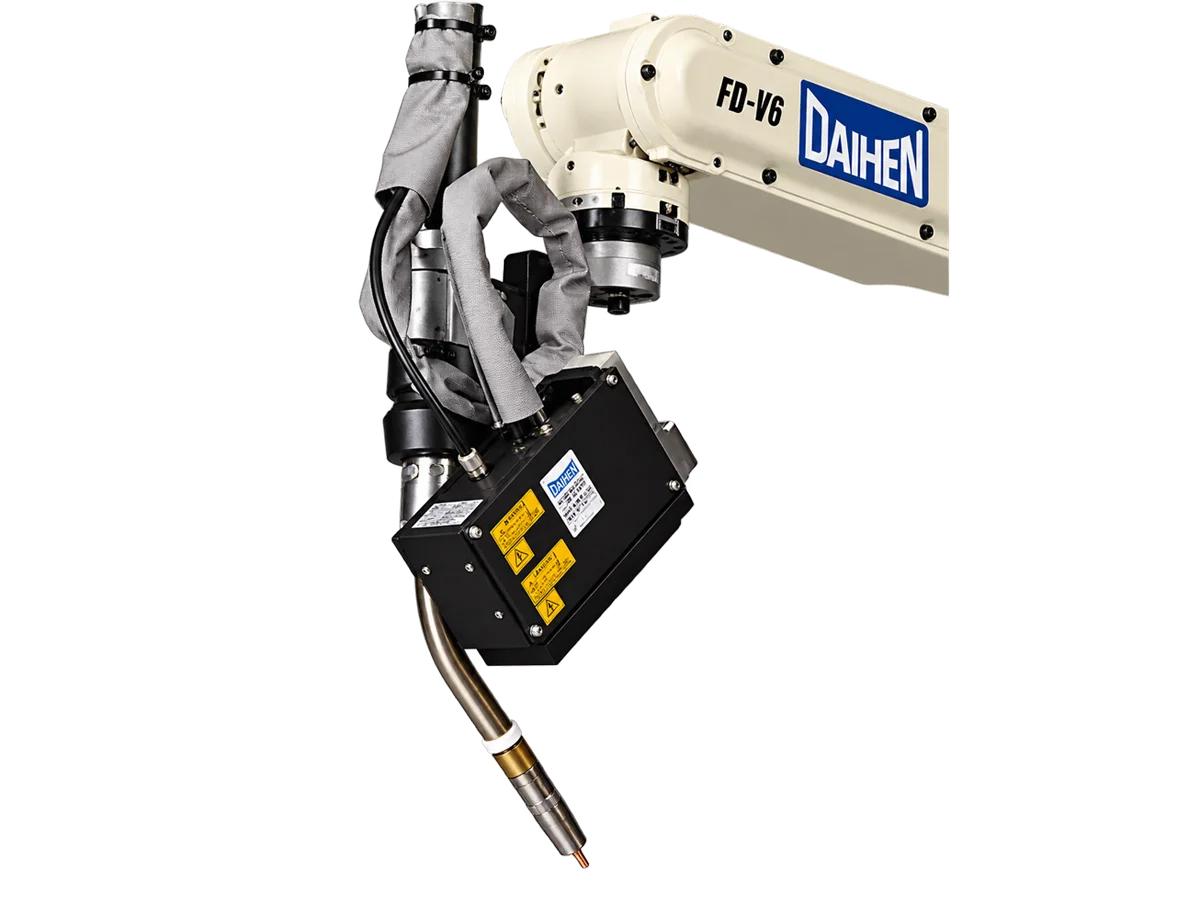
Quickly finds the weld joint using a blue laser, without touching the workpiece.
Measures the joint position and shape before welding to help compensate for part-to-part variation.
Not every job needs a laser. Touch sensing locates the part before welding, while arc feedback helps make corrections during welding.
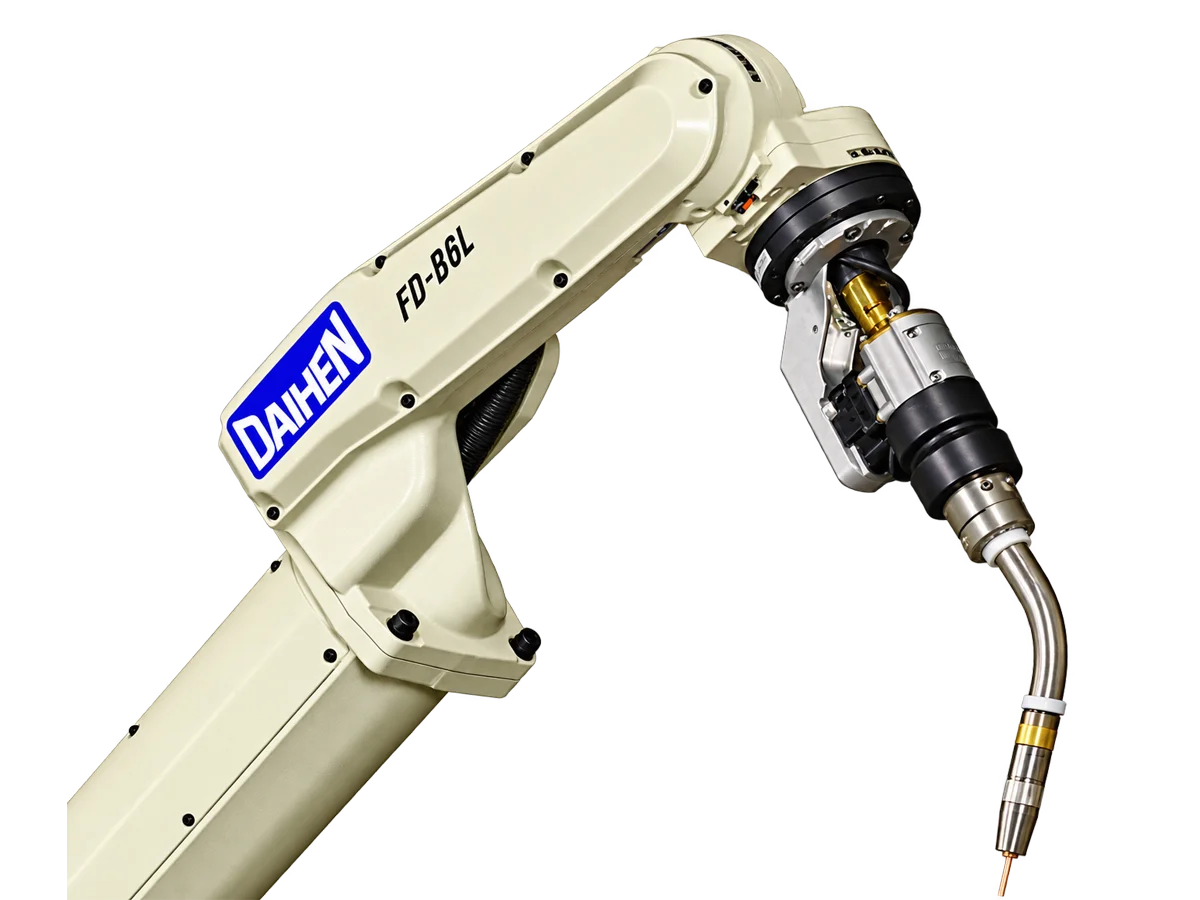
Finds the workpiece position by touching it with the welding wire before welding starts.
Uses feedback from the welding arc and a weaving motion to follow the joint during welding.
Some sensors locate the joint before welding; others make adjustments while the weld is being made.
Parts may sit a little differently from one cycle to the next. Seam searching finds where the joint actually is, allowing the robot to adjust its weld position before the arc starts. Laser search and touch sensing are two ways to do this.
Seam tracking helps the torch follow the joint as welding progresses. Laser tracking and through-arc tracking can correct the weld path.
Tell us about your parts, materials and welding process. We can help you explore the sensing options that suit your application.
Contact Us